

Starting a matcha brand is an exciting journey. It also means managing a real supply chain: grade selection, food-safe packaging, oxygen barrier, label compliance, and a practical go-to-market plan. This guide covers the main decisions faced by first-time founders. It also shares details that suppliers often leave unmentioned.
Before touching the supply chain, decide what kind of matcha business you are building. Options include a traditional ceremonial brand, a modern café-style latte line, or a culinary and baking product. Your grade choice, packaging size, and channel strategy all flow from that positioning. Get this right and every later sourcing decision gets much easier.
But first, the obvious question: is now a good time to launch? The short answer is yes. The monthly import trend below shows that global matcha powder shipments have climbed steadily since 2024. Demand is also no longer limited to Asian markets.

Step 1: Source the Right Matcha for Your Brand Identity
1.1 Choose a Tea Source You Can Verify
Choosing the right source is the foundation of your business. Partner with producers who bring deep-rooted tea-growing heritage, a transparent supply chain, and verifiable quality standards.
Authenticity matters, but so does proof. We recommend sourcing directly from recognized producing regions such as Uji, Nishio, Shizuoka, and, increasingly, quality-controlled farms in Zhejiang.Before committing to any production volume, ask every shortlisted supplier for three items. First, request a physical sample of the exact grade they will ship. Second, obtain a current Certificate of Analysis (COA) covering color value, caffeine, heavy metals, and pesticide limits. Third, ask for the certifications relevant to your target market, such as USDA Organic, JAS, EU Organic, or FDA food-facility registration. A reliable supplier provides all three without hesitation.
1.2 Compare the Three Main Matcha Grades
To help you decide what to source, here is a quick breakdown of the three main matcha grades:
Ceremonial Grade: This is the highest quality, made from the youngest tea leaves. It’s incredibly smooth, with a deep umami flavor and a naturally sweet finish. Best enjoyed on its own, whisked with hot water (usucha) or prepared as a thicker tea (koicha).
Premium/Latte Grade: Still very high quality, but designed to hold up beautifully when mixed with milk or sweeteners. It has a bolder flavor that won’t get lost and a vibrant color that stays true. Perfect for lattes, smoothies, and mixed beverages.
Culinary Grade: A more robust grade best suited for baking and cooking. Its flavor is stronger and can withstand heat better. While great for adding matcha flavor to food, it’s generally not recommended for drinking straight.
1.3 Match Origin, Grade, and Certification
Understanding these grades helps you align sourcing with your product line. Japan still supplies the gold-standard ceremonial-grade matcha and accounts for a large share of global imports (see Figure 2). China and Vietnam have grown rapidly as cost-effective origins for culinary and latte-grade powder. Quality varies widely between farms, though. Vietnam-sourced matcha may also face stricter buyer scrutiny on traceability. For all origins, place a 100–500g trial order first. Run side-by-side tastings, and confirm the COA before locking in a 12-month supply. Choose your origin based on the grade you sell and the certification requirements of your target market. Do not rely only on the cheapest quote on Alibaba.

Step 2: Choose the Right Packaging
Matcha is extremely delicate. Its worst enemies are light, air, moisture, and heat. Improper storage leads to a dull color, flat taste, and lost nutrients. Therefore, packaging is the most critical physical investment you will make.
2.1 Compare Common Packaging Materials
Here is an objective comparison of the most common packaging options:
Foil Bags & Pouches: Highly cost-effective, but once opened, powder clumps easily and lacks a premium unboxing feel.
Glass Jars: Beautiful, recyclable, and premium-feeling. Clear glass offers almost no UV protection, but amber or dark-tinted glass blocks a meaningful amount of light. Still heavy to ship (higher freight cost) and breakable in transit.
Paper Tubes: Eco-friendly and lightweight, but poor moisture barrier compared to metal.
Metal Tins: 100% lightproof, completely airtight, and structurally rigid. Perfect for premium retail and long-term storage, but requires a higher unit cost and printing MOQ.
2.2 Match Packaging to Your Price Positioning
There is no single “best” packaging — only the one that matches your product and your customer. For a premium gift line, consider a 12-month unopened shelf life in a cool, dry warehouse. Metal tins deliver full light block and strong oxygen and moisture barriers. Their rigid, reusable feel can also support a higher price point. For an everyday value SKU, a well-engineered high-barrier foil pouch can offer solid shelf stability at a lower unit cost. It also has a lighter footprint and cheaper shipping. Your final choice should depend on your price band, target customer, and desired unboxing experience. It should not depend on which material sounds more premium.
2.3 If Metal Tins Fit Your Brand, Evaluate the Manufacturer
Not every brand needs tins — and that’s completely fine. If you have worked through the trade-offs above and decided a metal can suits your price band and unboxing goals, here is what separates a good supplier from a bad one. If you have landed on foil, glass, or paper instead, keep the same checklist in spirit. Look for food-grade materials, a real sealing barrier, honest MOQs, and a supplier who sends samples without pushback.
A manufacturer worth working with should meet the following standards:
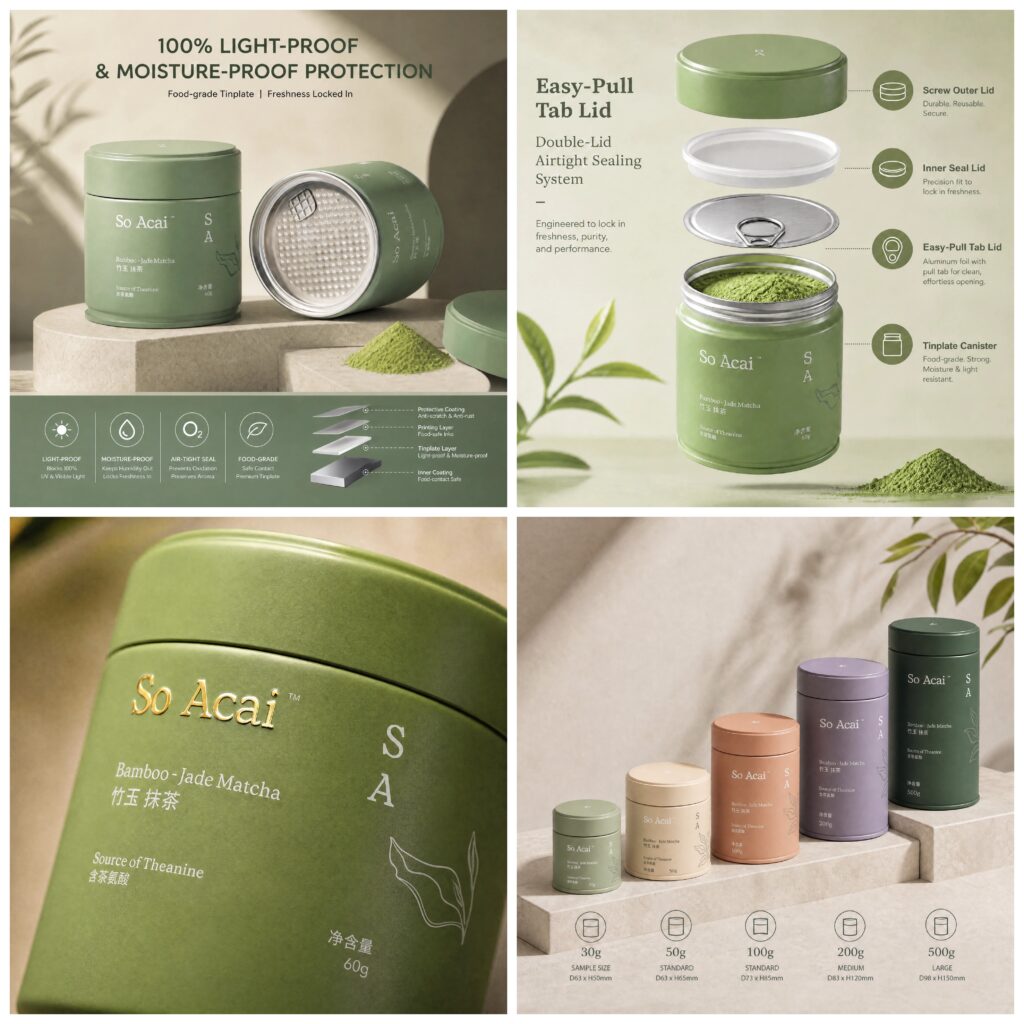
• 100% Food-Grade & Superior Protection
• Advanced Sealing Options
• Premium Craftsmanship & Finishes
• Flexible Sizes for Every Need & Diverse Design Capabilities
2.4 Ask Practical Questions When Requesting Quotes
To make the checklist above concrete, here’s how to translate it into questions when you request quotes. You don’t need every box checked — pick what matters for your shelf life, your price point, and the unboxing experience you want.
2.4.1 Food-grade materials: Ask what steel they use, and ask for the food-contact compliance docs. A suitable tin should be made from food-grade tinplate and fully opaque. That means it blocks essentially all UV and slows oxidation of chlorophyll and umami compounds. Treat this as table stakes, not a premium feature. Any supplier who cannot show these docs should leave the shortlist.
2.4.2 Sealing options: There are a few common setups, and you don’t need all of them. A double lid supports daily reuse. An easy-peel aluminum foil membrane gives factory-level tamper-evident sealing. Screw-top or friction-fit lids keep things airtight between openings. Pick based on how long your customer will realistically take to finish the tin. For a 30g ceremonial pack finished in a month, you do not need the most elaborate system.
2.4.3 Print finishes: Ask what’s included in the base price and what costs extra. Matte and glossy finishes, orange-peel texture, CMYK full-color, Pantone matching, and gold or silver hot stamping all exist in the market. These choices drive unit cost and MOQ upward. For a first run, keep it simple. A standard finish with one or two colors usually does the job. You can upgrade finishes on SKU v2 once you know the product sells.
2.4.4 Sizes and tooling: Ask what standard stock sizes they have — 30g and 50g are common starting points. Avoid custom dimensions on your first order; tooling adds cost and raises the MOQ. On artwork, describe your brand direction and ask what their presses can reproduce well. A reputable shop will tell you honestly what works and what does not, instead of saying yes to everything.
2.5 Understand the MOQ Reality Check
One more practical factor to weigh: minimum order quantities. As a startup testing your first SKU, the upfront stock quantity matters. Not every packaging format treats small orders the same way. Foil pouches generally have relatively low MOQs. Glass jars and paper tubes sit at a moderate level, while custom printed metal tins usually require higher minimum order quantities for the first run. Exact numbers vary by supplier and region, but the relative order is consistent. If you are still validating demand and cannot afford a large batch of unsold units, take this constraint seriously.
2.6 Why custom-printed tins demand a higher minimum
Custom-printed tins demand a higher minimum for physical economic reasons, not supplier greed. Custom CMYK or Pantone printing needs separate physical plates for each color. Press setup, color alignment, and test runs take hours before production can begin.
A factory needs a certain order volume to absorb those setup costs and offer a reasonable unit price. Tinplate also arrives in large sheets. Cutting them into round canisters creates edge waste that only makes sense across a large run. Modern can lines run at high speed too. The setup and cleanup time for a small order is nearly the same as for a big one. High minimums are not arbitrary; they keep the unit price reasonable for everyone.
2.7 Lower MOQ Risks for Your First Run
You can work around higher MOQs without betting the farm. Three common paths are available.
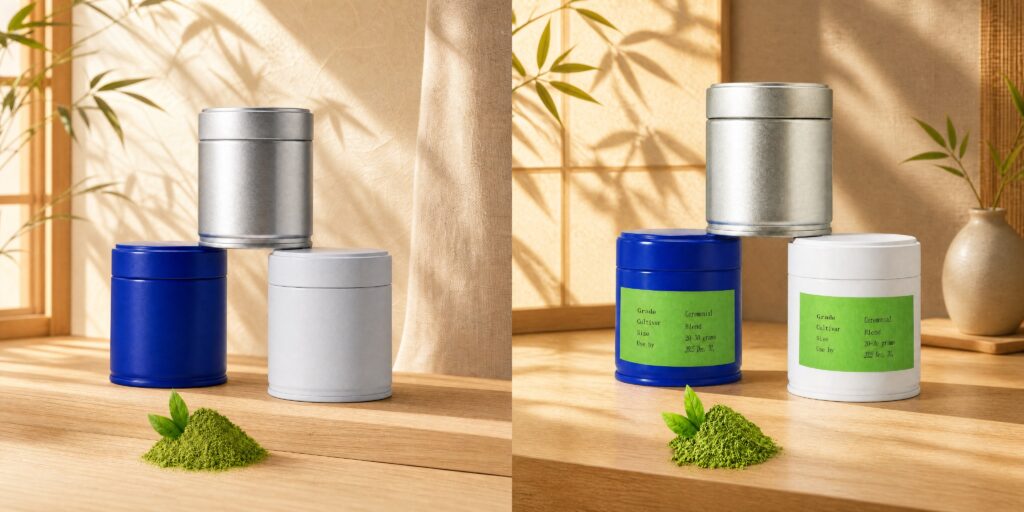
First, buy blank unprinted tins at a lower minimum and apply your own sticker labels. This is the lowest-risk way to test multiple flavors. Labels can smudge in humidity, though, and they never look quite as clean as direct print.
Second, use the factory’s existing stock molds and standard sizes, such as 30g or 50g, with a one or two color logo print. This avoids mold fees and keeps the minimum lower.
Third, scale up to the full run only if you already have real demand in hand. Examples include a waitlist, a committed café partner, or repeat orders from a first small batch. You can then lock in a cheaper unit price.
Be honest with yourself as a new brand builder with no sales history. “Confident” is usually “hopeful.” Stuck inventory on a flop SKU is the most expensive mistake a new food brand makes.
Step 3: Where to Sell — Choosing Your Sales Channels
3.1 Match Matcha Grade to Sales Channels:
Match each matcha grade to its right sales channel, so you do not waste premium product on the wrong audience. Ceremonial-grade is for tea enthusiasts: direct-to-consumer sales, specialty tea shops and gift sets. It can be served in cafes, but not as your standard latte powder. Milk and sugar mask its subtle premium flavor. Reserve it for pure tea menus, limited-edition drinks or tea tasting experiences. Latte-grade targets latte lovers: cafes, smoothie shops, gym juice bars and young home consumers. Culinary-grade is sold as an ingredient for home bakers, food developers and small bakeries, usually in larger packs. Sell it around recipes and bulk value instead of visual branding.
3.2 Compare Channel Trade-Offs:
Each channel has a real trade-off. Your own website gives the highest gross margin and cleanest customer relationship, but not necessarily the highest net profit. You build traffic from zero and usually need six to twelve months of consistent content work before orders steady out.
Marketplaces like Amazon and Etsy bring traffic you did not have to build. They also take fees, squeeze pricing, and can turn a specialty product into a price comparison. Local cafes and stockists give immediate validation, but expect wholesale terms of roughly half retail as a starting point. Calculate whether that still covers your costs. Weekend markets and pop-ups do not scale, but they are the cheapest customer research available.
Choose one channel that brings steady volume, such as a marketplace, a handful of cafes, or weekend markets. Pick one that builds the brand long-term, such as your own site or an email list.
3.3 Pricing & 90-Day Channel Testing:
Price from unit economics, not hope. Many new founders underprice, leaving no room for wholesale discounts, shipping, fees, or ads. Before launching, check that the retail price covers landed cost, packaging, platform and payment fees, shipping, wholesale discount, samples, ads, and a reasonable profit. Earn your price through better packaging, content, and service—not by being the cheapest option on the shelf.
Test channels in small batches before expanding. Once your first SKU is proven, run two or three SKUs per channel. Track weekly orders or inquiries, conversion, repeat purchase, sample-to-wholesale conversion, and market feedback. For volume channels such as marketplaces, cafes, and weekend markets, a 90-day window is a reasonable first checkpoint. Keep what pulls steady orders, and cut or pause what does not. Brand channels, such as your own site and email list, move on a longer cycle. They usually need six to twelve months of consistent content before orders steady out, so do not judge them on 90-day numbers alone. After the test, keep one volume channel and one brand channel that actually work. The most common mistake is trying to be everywhere at once: five half-efforts rarely beat two channels that perform.
Step 4: How People Find You — and Come Back
Channels get you shelf space, but content is what makes someone actually buy and buy again. Matcha is an education category: people don’t impulse-buy it like a candy bar. They buy it once they understand what it is, why it’s different, and how to use it.
4.1 Educational Content Is Your Cheapest Ad
Sharing knowledge about matcha is key to building a loyal following. When people understand the care that goes into producing high-quality matcha (like the grades and origins), they appreciate it more. You can create blog posts, short videos, or host online Q&A sessions. Explaining the difference between ceremonial and culinary grades, for example, helps customers choose with confidence and feel more connected to your brand.
4.2 Show Up Where Matcha Gets Discovered
Be present on Instagram, TikTok, Pinterest, and YouTube Shorts — that’s where new matcha brands actually get discovered. Post the powder’s color in natural light, the motion of the whisk, the unboxing, or a fifteen-second clip from the farms or filling lines. Use specific hashtags such as #ceremonialmatcha, #matchalatterecipe, and #matchabrand, rather than broad ones. Post consistently for three to six months before expecting meaningful DTC traction. Teach the craft too: how to use a bamboo whisk (chasen) to build a frothy base, why oat milk or whole milk makes better latte foam, and how too much matcha turns bitter while too little looks pale. People remember the brand that taught them something.
4.3 Service Is What Keeps People Coming Back
Don’t sleep on service. Good customer care isn’t glamorous, but it’s what turns a one-time buyer into someone who orders again and tells friends. Be responsive to inquiries. Make the purchasing process smooth. Add small personal touches, such as a handwritten thank-you note, a tiny sample of a different flavor, or a brewing tip printed on the insert card. You’re not just selling green powder; you’re selling a small ritual in someone’s day. The brands that last treat every order as the start of a relationship, not the end of a transaction.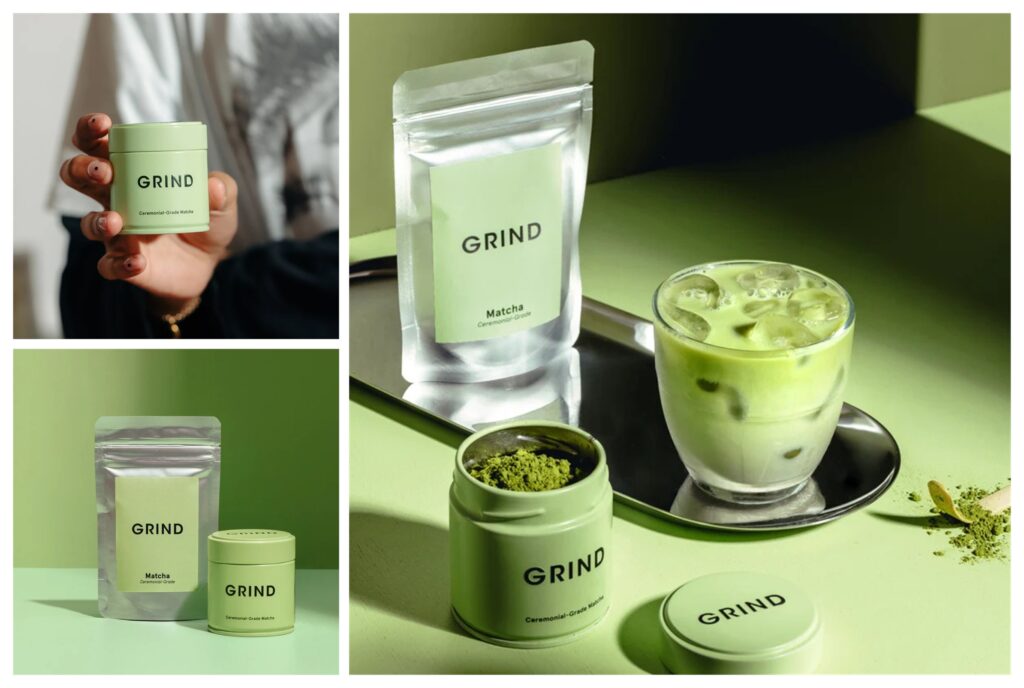
Step 5: Four Mistakes That Sink New Matcha Brands — and How to Avoid Them
By now you’ve got the whole picture: the tea, the packaging, the channels, the content. The last thing that kills a new brand is usually not a decision made on day one. It is the small things forgotten along the way. These are the four we see most often.
5.1 Letting good tea go stale before you sell it.
Matcha isn’t a can of beans, it degrades in heat, light, and air, even when it’s sealed. New founders buy beautiful ceremonial-grade matcha, then leave it in a warm warehouse or sunny office corner for six months while they figure out marketing. By the time it ships, the green is dull and the umami is flat. Store bulk matcha cool, dry, and dark — and don’t buy a year’s supply until you know you’ll sell it.
5.2 Putting labels you can’t legally stand behind.
Mismatched grade labeling can be misleading, such as calling latte-grade matcha ceremonial-grade. Organic claims should be supported by valid certificates. Labels must also include nutrition panels, allergen information, and clear origin statements. Label law isn’t optional, and a warning letter from a regulator costs more than getting it right the first time. When in doubt, get a local compliance read before you print 5,000 stickers.
5.3 Launching five flavors on day one.
It feels creative. It feels like a real brand. BFive SKUs mean five minimum orders, five label runs, five marketing messages, and five ways for customers to get confused. The brands that survive launch with one SKU done really well, prove it sells, and add a second SKU six months later. You can always add flavors later — you can’t un-spend the money.
5.4 Forgetting landed cost when you price it.
You did the math on tea + tin + shipping to yourself, and it looked profitable. Then customs duties, platform fees, payment processing, shipping to the customer, packaging inserts, and returns quietly cut that margin in half. Before you set a price, build the full landed cost, including every line item and the ones you hope you will not need. If the math doesn’t work at your target price, raise the price or find a cheaper tea. Don’t just hope it’ll work out.
결론
If you have made it this far, you have the basics: pick the right grade for your brand, choose packaging that fits your budget and shelf life, start with one or two sales channels, and build trust through honest content and good service. The rest is just showing up.
If you would like to compare packaging options, request blank tin samples, or talk through a first-run plan that fits your budget, we are happy to help. Reach out anytime for a free quote tailored to your target weight — and good luck with your matcha brand.
 Korean
 English
 Arabic
 German
 Greek
 Italian
 Spanish
 Russian
 French
 Japanese
 Thai
 Vietnamese